Loading...
Serving Evansville, IN and surrounding areas. (930) 212-1786
Serving Evansville, IN and surrounding areas. (930) 212-1786
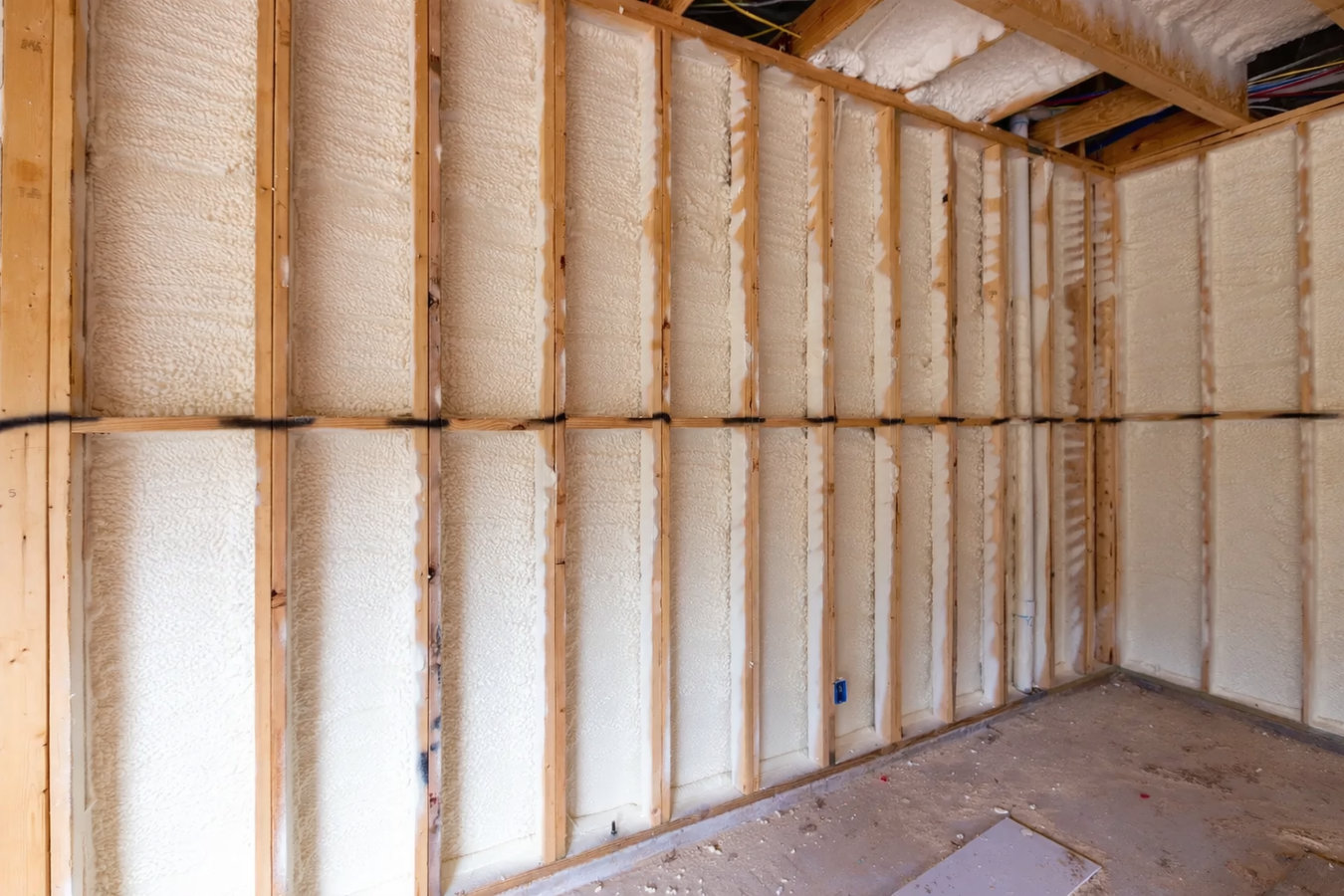
Bare concrete basement walls silently drain your heating budget all winter and pull in humidity all summer. We insulate, air-seal, and verify the results so your home holds its temperature in both directions.
Basement insulation in Evansville, IN wraps your foundation walls and rim joists in a thermal barrier that keeps warm air in during winter and slows moisture-driven heat gain during summer, most standard jobs finish in one to two days with no need to leave your home during the work. The difference shows up in comfort first: floors stop feeling cold underfoot in January, and that damp, musty air that drifts up from an uninsulated basement in July largely goes away.
A significant share of Evansville homes were built before the 1980s, when basement insulation simply was not part of standard construction. If you walk into your basement and see bare concrete or block walls with nothing covering them, that is not unusual for this city. It does mean your heating system has been working harder than it needs to every winter since the house was built. The good news is this is one of the most straightforward performance improvements available to Evansville homeowners.
Basement insulation and air sealing work best together. Insulation slows heat moving through the walls; air sealing closes the gaps where air bypasses the insulation entirely. Many homeowners who insulate their basements also benefit from pairing that work with crawl space insulation if part of their home sits over an unconditioned crawl space rather than a full basement.
If the floors on your main level feel noticeably cold underfoot during Evansville's winter months, the basement below is likely pulling heat out through the floor. This is especially common in older homes in the city's established neighborhoods where the basement ceiling has no insulation. It is one of the most direct signs that your basement is costing you comfort and money every day from November through March.
Evansville summers are humid, and when warm outdoor air meets the cooler surfaces of an uninsulated basement, condensation forms and that familiar damp, musty odor follows. If you notice this pattern every summer, it signals that your basement's thermal envelope needs attention and that moisture management should be part of the solution, not an afterthought.
If your utility bills have been rising and you have not changed your habits or equipment, the basement is one of the first places to look. An uninsulated or poorly insulated basement is one of the biggest sources of energy loss in a home, and in Evansville's climate with cold winters and hot, humid summers, that loss adds up in both directions across the full calendar year.
If you walk into your basement and the walls are exposed concrete or cinder block with nothing covering them, you are losing energy every day. Many Evansville homes built before the 1980s were finished this way. It is one of the most straightforward problems an insulation contractor can address, and the improvement in comfort is typically noticeable within the first season after the work is done.
We offer two main approaches to basement insulation, and the right choice depends on how you use your basement. Wall insulation, installed along the interior perimeter, is the better choice when your basement is heated, used as living space, or simply needs year-round moisture management. It creates a true thermal envelope around the entire lower level. For basements that are purely unheated storage, insulating the floor above, meaning the ceiling of the basement, protects the living areas above without conditioning the space below.
Rim joist insulation is a specific part of every basement job we do. The rim joist is the band of framing that sits directly on top of your foundation wall, and it is one of the most air-leaky spots in an older home. We seal it with spray foam or rigid foam board depending on the conditions we find. Homeowners who combine rim joist work with full wall insulation typically see the biggest difference in winter comfort. For those also interested in closed-cell foam insulation, the basement and crawl space walls are often the best places to apply it because of how well it handles moisture exposure.
We check for moisture before recommending any material. Evansville's clay-heavy soil creates real pressure on foundation walls, and insulating over a dampness problem makes it worse. If we find active moisture intrusion, we will tell you plainly what needs to happen first. That kind of honest assessment is something you should expect from any contractor you invite into your home.
Best for heated or finished basements; wraps the perimeter in a full thermal envelope for year-round comfort and moisture management.
Targets the framing directly above the foundation wall, a top source of air leakage and heat loss in older Evansville homes.
Right for unheated basements where the priority is protecting the floors and living areas above, not conditioning the basement itself.
Ideal for damp-prone walls and rim joists where both insulating value and moisture resistance are needed in a single product.
Evansville sits in a mixed-humid climate zone that pushes hard in both directions. Winters here bring sustained cold with regular freeze-thaw cycles, and summers bring genuine heat and persistent humidity from the Ohio River valley. A basement that is bare concrete on both sides is operating as a thermal weak point for roughly nine months of the year. That is not a small thing when you are paying to heat and cool your home through the full range of what Indiana and southern Indiana weather delivers.
The clay-heavy soil common throughout Vanderburgh County and the surrounding area drains slowly, which means groundwater and seasonal moisture press against foundation walls longer than it would in sandier soils. This makes moisture assessment a non-negotiable part of any basement job here. The contractors who skip that step are not doing you a favor. A damp wall with insulation on top is a mold problem waiting to develop, and it is far more expensive to fix than the original insulation would have been to do right.
We serve homeowners across Evansville and into the surrounding region. Customers in Newburgh, where a large share of homes were built in the 1970s and 1980s and are now at the age where insulation needs updating, find that basement and rim joist work delivers some of the fastest payback available. Homeowners in Henderson, KY and Owensboro, KY across the river face similar climate conditions and older housing stock, and our crew understands the site conditions in both states.
We respond within 1 business day. We ask about your basement's size, whether it is finished or unfinished, and whether you have noticed any moisture. This helps us arrive prepared with the right materials and a realistic time estimate.
We walk your basement and look at the walls, floor, ceiling, and any visible gaps or cracks. We check for moisture, existing insulation, and anything that would affect the approach, such as pipes, panels, or old framing. This visit typically takes 30 to 60 minutes.
After the visit you receive a written estimate that breaks down cost by material and labor. We explain what we are recommending and why, not just hand you a number. If a permit is required, we tell you here and handle the filing on your behalf.
After you clear stored items from the walls, the crew installs insulation and seals gaps in a single day for most standard Evansville basements. Before leaving, we walk through the finished work with you, answer questions, and confirm the space is ready to use.
We will check for moisture first, give you a written estimate with no pressure, and respond within 1 business day.
(930) 212-1786We check for active moisture before recommending any insulation material. Evansville's clay-heavy soil means water presses against foundation walls longer than in sandier areas, and insulating over a moisture problem makes it worse. We will not skip this step.
We serve Evansville and 11 surrounding communities in Indiana and Kentucky. Homes throughout this region share the same climate challenges, aging housing stock, and moisture pressures that come with Ohio River valley geography.
CenterPoint Energy serves most of Evansville and has offered rebates for insulation improvements. We stay current on what programs are available so you do not miss incentives you qualify for before the project is finalized.
ENERGY STAR Seal and InsulateCertain basement insulation projects in Evansville require a permit through the city's Department of Metropolitan Development. We determine whether your job triggers that requirement and handle the filing so you do not have to track down the paperwork yourself.
Every basement job we do starts with an honest assessment of what is actually there, not just what is easiest to insulate. Evansville's mix of older housing stock, clay soil, and a climate that swings between cold winters and humid summers means that cutting corners on moisture evaluation and air sealing creates problems that cost far more to fix later. We would rather tell you about a complication upfront than hand you a bill for remediation work a year down the road.
Closed-cell spray foam is the highest-performing option for basement walls and rim joists, combining insulation and moisture resistance in a single application.
Learn moreIf your home has a crawl space rather than a full basement, targeted crawl space insulation addresses the same heat loss and moisture problems through a similar approach.
Learn moreEvansville winters are long and unforgiving on uninsulated basements. Lock in your installation date now before the cold season arrives and your heating bill climbs.