
Loading...
Serving Evansville, IN and surrounding areas. (930) 212-1786
Serving Evansville, IN and surrounding areas. (930) 212-1786
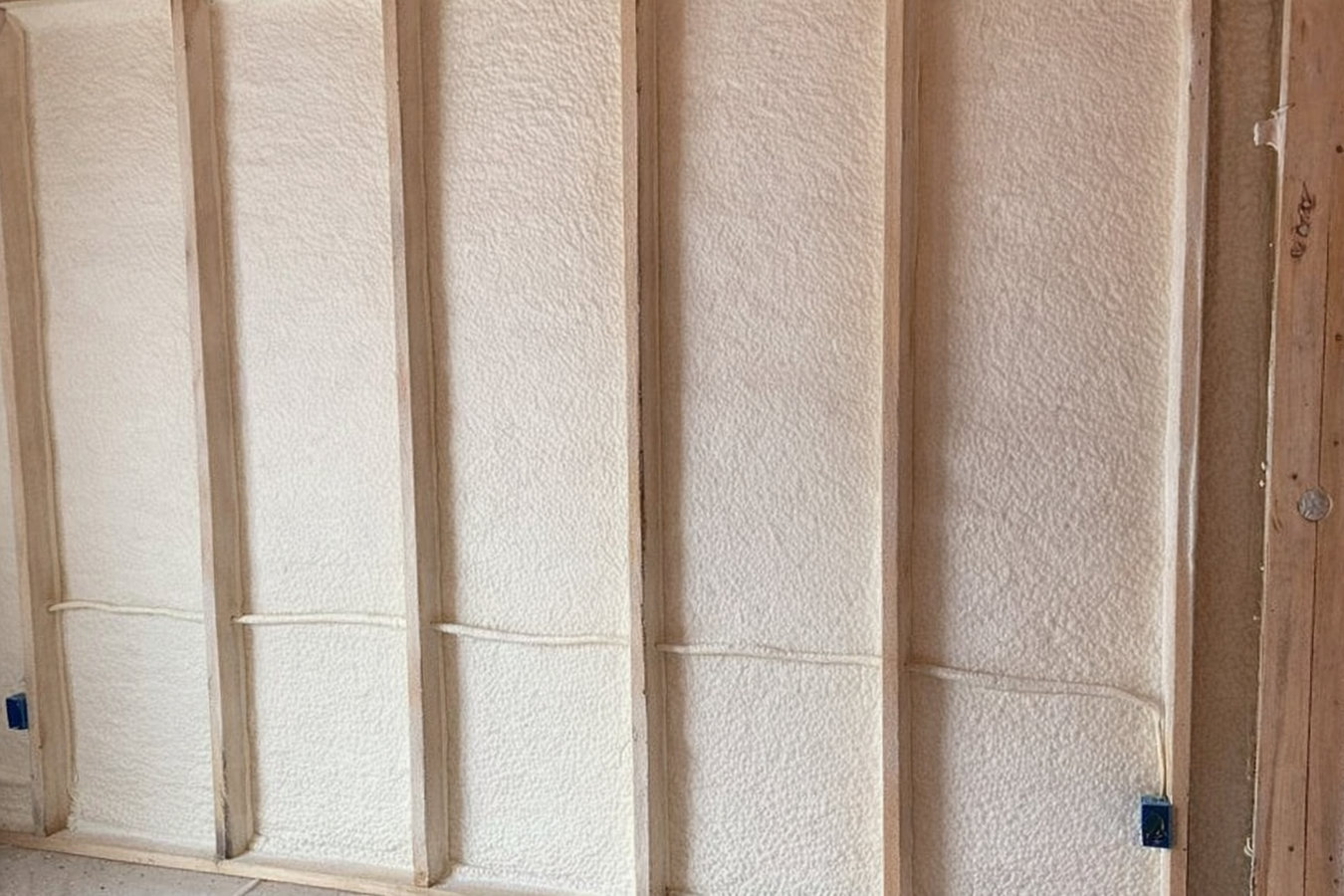
Closed-cell foam insulates, seals air gaps, and resists moisture in one application. For Evansville crawl spaces, rim joists, and older wall cavities, no other material does as much work per inch.
Closed-cell foam insulation in Evansville, IN is a two-part liquid sprayed onto walls, floors, or ceilings where it expands and hardens into a dense, rigid layer that insulates and seals air and moisture simultaneously, most residential jobs in a crawl space or rim joist area are completed in a single day with a 24-hour re-entry window after installation. That combination is what separates it from fiberglass batts or blown-in: both of those slow heat movement through a surface, but neither stops air from moving through the gaps around them. In Evansville's mixed-humid climate, where you are fighting heat and humidity in the summer and cold in the winter, that air-sealing function is often where the actual energy savings come from.
A large share of Evansville's housing stock was built before modern insulation standards, particularly in neighborhoods like the Near Eastside, Jacobsville, and the older West Side. Homes from that era were built with little or no wall insulation, and whatever was added over the years may have settled, gotten wet, or simply worn out. Closed-cell foam is well-suited to these situations because it can be sprayed into existing cavities and irregular spaces without requiring a full gut renovation.
For homeowners evaluating their options, it helps to see closed-cell foam alongside open-cell foam insulation, which is softer, vapor-permeable, and costs less per square foot but does not provide the same moisture resistance. The right choice depends on where it is going and what conditions that space faces in Evansville's climate.
If your heating or cooling bills feel out of proportion to your square footage, especially during Evansville's July and August heat or January cold snaps, air leaking through uninsulated gaps is one of the most common causes. Closed-cell foam addresses both the thermal and the air-sealing side of the problem in a single application, which is why the improvement is often more noticeable than switching to a thicker batt.
Evansville's wet springs and high water table mean crawl space moisture is a very common problem, and a musty smell drifting up through your floors is one of the clearest signs moisture is getting in and sitting there. Left alone, that moisture damages wood, encourages mold, and makes your home less comfortable year-round. Closed-cell foam applied to crawl space walls does not absorb water and creates a real barrier against this pattern.
If one part of your home is always too hot in summer or too cold in winter, that area is poorly insulated or has significant air gaps. This is especially common in Evansville's older homes where additions were sometimes built without the same care as the original structure. A foam contractor can spot the weak points during a walk-through and explain specifically where the thermal boundary is failing.
Hold your hand near an electrical outlet on an exterior wall on a cold day. If you feel cool air, that wall cavity connects to the outside through a gap. The same test works at baseboards and around older window frames. These are classic signs of an unsealed building envelope, and they are especially common in Evansville homes built before the 1970s where wall plates were never sealed at top or bottom.
The highest-priority targets for closed-cell foam in a typical Evansville home are the crawl space walls, the rim joist above the foundation, and any unconditioned areas where moisture exposure is a real concern. The foam's dual function, insulating and sealing moisture, makes it the right choice for these locations in a way that batt insulation simply cannot match. We apply it in controlled passes, measuring thickness as we go, so there are no thin spots or skipped areas in corners and edges.
For attic and wall applications, closed-cell foam can also be applied to the underside of the roof deck or into wall cavities during renovation work. In each case, it adds structural rigidity to the assembly as a side benefit, which matters in a region that sees strong spring thunderstorms and occasional high winds. Homeowners who combine closed-cell foam with full spray foam insulation throughout the building envelope get the most complete air and thermal barrier a single product can deliver.
Before recommending closed-cell foam for any space, we check for existing moisture intrusion or pest damage. Foam applied over a moisture problem does not fix it. In Evansville's clay-heavy soil environment, that check is not optional. We will tell you plainly if drainage or remediation work needs to happen first, and we will not pressure you to proceed before the space is ready.
Best for wet-prone crawl spaces under older Evansville homes; creates a durable moisture barrier and thermal layer on crawl space walls and the band joist in a single application.
Targets the top-of-foundation framing that is one of the worst air leakage points in older homes, delivering immediate comfort improvement for a relatively small project footprint.
Right for unvented attic assemblies and homes where the roof deck needs both insulation and air sealing, particularly in older homes with irregular framing that batts cannot fill cleanly.
Used in open wall situations during renovations, giving older Evansville homes with no wall insulation the highest-performing upgrade available for their climate zone.
Evansville occupies a mixed-humid climate zone, which means insulation has to perform in both directions and handle genuine moisture pressure throughout the year. Hot, humid summers regularly push temperatures into the 90s and keep relative humidity high for weeks at a time. Cold winters bring sustained freezing temperatures and the freeze-thaw cycles that crack concrete and mortar throughout the city. A material that only addresses one of those problems is never quite enough here. Closed-cell foam handles both because it insulates and resists moisture simultaneously, which is exactly what a climate that swings this hard demands.
Evansville's proximity to the Ohio River and its relatively flat terrain mean that groundwater is a real and recurring presence for many homeowners. Crawl spaces and basements in this area face moisture pressure that is not typical in drier inland climates. The clay-heavy soils throughout Vanderburgh County drain slowly, which means water sits against foundation walls longer after heavy rain. That is precisely the environment where closed-cell foam's moisture-resistant properties earn their keep, and why we recommend it by default for any below-grade or ground-adjacent application.
We serve Evansville and the surrounding region, and our customers come from across the area. Homeowners in Jasper and Tell City face similar older housing stock and comparable climate demands, and the same approach that works well for Evansville's West Side brick homes works for homes in those communities too. Across the river in Henderson, KY, where humidity presses hard against older foundations along the river corridor, closed-cell foam is often the most straightforward fix available.
We respond within 1 business day. Spray foam jobs vary too much by home age, layout, and condition for any honest contractor to quote without seeing the space. We schedule a time to come to your home, not give you a price over the phone.
We examine the areas you want insulated, check for existing moisture or pest damage, and note any old insulation that needs removal first. You receive a written estimate that breaks down what areas will be treated, how thick the foam will be applied, and the total cost, with permit notes included.
Before the crew arrives, clear the work areas of stored items and arrange to be out of the home for installation day and one overnight. Your contractor will give you a specific list of what to move and confirm the re-entry window based on the job size and ventilation.
The crew sprays foam in passes, expanding and firming within minutes. Most residential jobs finish in one day. If a permit was required, a city inspector will schedule a visit to verify the work meets code, and we coordinate that so you do not have to manage it separately.
We walk your home, show you exactly what we recommend and why, and give you a written quote, no pressure, no guesswork.
(930) 212-1786The crawl space walls and rim joist are the highest-priority targets for closed-cell foam in most Evansville homes. These are the areas where air leakage and moisture exposure combine, and where the foam's dual function delivers the clearest return. We do not skip these in favor of easier-to-access areas.
We serve Evansville and 11 surrounding communities. Whether your home is in Evansville's Near Eastside, out in Newburgh, or across the river in Henderson or Owensboro, our crew knows the housing stock and climate conditions specific to this part of the Ohio River valley.
Closed-cell foam often triggers Evansville's permit requirements for work affecting the building envelope. We determine whether your project requires a permit through the city's Department of Metropolitan Development and handle the filing and inspection coordination on your behalf.
Spray Polyurethane Foam AllianceWe follow the EPA's guidance on re-entry times after spray foam installation. You and your family, including pets, will be given a specific window to stay out of the home. We do not rush this step. A contractor who tells you that you can return in a few hours after a significant foam job is not following established safety protocols.
EPA Spray Foam Safety GuidanceSpray foam done right requires trained installers who understand mix ratios, proper thickness, and when a space is actually ready to receive foam. Evansville's older housing stock, its clay-heavy soil, and the real moisture pressure from Ohio River valley weather mean there are more variables here than in newer, drier markets. We have worked in this region long enough to recognize those variables on a walk-through, and we will not recommend a product or approach that is wrong for the conditions your home presents.
Open-cell foam offers a lower-cost alternative for interior walls and attics where moisture resistance is less critical than sound dampening and vapor permeability.
Learn moreAn overview of both closed-cell and open-cell spray foam options, helping you understand which type makes sense for each part of your Evansville home.
Learn moreEvansville's shoulder seasons fill up fast. Book your on-site walk-through now and be protected before the next extreme season arrives.